
"African drying beds"
600 article(s) found

Professional boutique coffee training | understand the flavor characteristics of fine coffee beans in Africa, America and Asia
Professional baristas follow the Coffee Workshop (official Wechat account cafe_style) now walking into a coffee shop, you can see not only cappuccino, latte, mocha and other coffee, but also coffee from different place names of different countries. People who are in initial contact with boutique coffee know something about it, and it is easy to order. So how do you learn from these who haven't come into contact with boutique coffee?

Panamanian Honey Coffee | Panama BOP | Los Lajones Estate Manor
Professional coffee knowledge exchange more coffee bean information please follow the coffee workshop (Wechat official account cafe_style) front street coffee Panamanian coffee bean recommendation | Panamanian Flower Butterfly | Emerald Manor Blue Standard Central American Panama Panama is very much to look forward to the country Panama's best coffee Best of Panama cup competition has attracted global attention except coffee itself.

There are several flavors of boutique coffee. How does the flavor of coffee come from? how does the treatment affect it?
Professional coffee knowledge exchange more coffee bean information please follow the coffee workshop (Wechat official account cafe_style) Front Street-one of the sources of coffee flavor coffee flavor comes from the following aspects: origin, type of coffee beans, treatment and roasting. In this article, we will show you how different treatments of raw coffee beans affect the flavor of coffee. Boutique coffee

Description of the Flavor of the Historical Variety treatment method of Rwandan Coffee beans
Professional baristas please follow the coffee workshop (Wechat official account cafe_style) Rwanda (Rwanda), known as Land of a Thousand Hills, is located on the equator and is surrounded by East African States such as Congo, Uganda, Tanzania and Burundi. Geographically, it has suitable conditions for growing coffee, but it has been introduced by German missionaries since 1904.

Characteristics of planting and processing Flavor of washed Coffee in Kenya brief introduction of Coffee washing and processing Plant gikirima
Africa used to dominate the global coffee market. At the peak of production, African countries accounted for four of the world's top ten coffee producers. Today, African coffee beans still compete in the world coffee market. Kenya is one of the largest exporters of fine coffee on the African continent. Qianjie will take you to learn about the cultivation and processing of coffee in Kenya. The GIKIRIMA factory is located in Mount Kenya.

Ethiopian Coffee producing area Sidamo Coffee Bean introduces Ted Manor Coffee Flavor
Altitude: 1800-2000m, use other trees around to form natural shade for coffee trees. Harvest season: may 2015 treatment: washing 24-26 hours, African elevated bed drying 10-15 days flavor description: jasmine and citrus aromas, yellow drupes, litchi, red currants, rose, complex and deep, rich flavor, bright sour and sweet, well-structured taste, fruit

Panamanian Poquet Sun Bean-Emporium Estate Empolian Manor Yellow Kaduai,
Professional coffee knowledge exchange more coffee bean information please follow the coffee workshop (Wechat official account cafe_style) Panama Poquet sun beans-Emporium Estate Empolian Manor yellow Kaduai, Pacamara, tin pickup flavor? For a long time in coffee history, Panamanian coffee was underestimated or even ignored, until the annual International Cup held in recent years.
The origin of coffee beans and the characteristics of high-quality coffee beans the characteristics of Ethiopia and Kenya
Professional baristas follow the Coffee Workshop (official Wechat account cafe_style) now walking into a coffee shop, you can see not only cappuccino, latte, mocha and other coffee, but also coffee from different place names of different countries. People who are in initial contact with boutique coffee know something about it, and it is easy to order. So how do you learn from these who haven't come into contact with boutique coffee?

What are the Rwanda coffee brewing steps for the Rwanda Bourbon brand?
Professional baristas exchange please follow the coffee workshop (Wechat official account cafe_style) hand-made in Rwanda. 15g powder, medium fineness grinding (small Fuji ghost tooth cutter 3.5 grinding), v60 filter cup, 90-92 degrees water temperature, first water injection 30g water, 27 seconds steaming, injection to 105g water cut off, wait for powder bed water to half, then water injection, slow water injection until 225g water, tail section

Distinguishing different flavors of coffee beans what is the unique taste of coffee beans from all over the world
More information on coffee beans Please follow the coffee workshop (official Wechat account cafe_style) now walking into a coffee shop, you can see not only cappuccino, latte, mocha and other coffee, but also coffee from many different place names of different countries. People who are in initial contact with boutique coffee know something about it, and it is easy to order. So I haven't come into contact with boutique coffee.
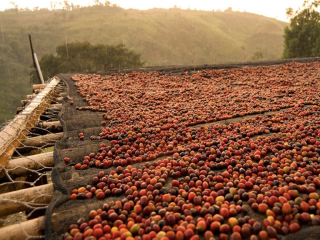
What is sun treatment? introduction to the flavor and taste characteristics of the technological steps of sun-drying coffee beans
Tanning is a traditional method for the initial processing of coffee beans, and at present, almost all coffee-growing countries such as Ethiopia and Yemen still use solarization to treat raw beans. Sun treatment will first identify sunken beans in the sink, that is, ripe or half-ripe beans are spread in the drying farm for natural drying. The specific time depends on the local

What does Rwanda water wash bourbon taste like? how does Rwandan coffee brew?
Professional baristas exchange please follow the coffee workshop (Wechat official account cafe_style) hand-made in Rwanda. 15g powder, medium fineness grinding (small Fuji ghost tooth cutter 3.5 grinding), v60 filter cup, 90-92 degrees water temperature, first water injection 30g water, 27 seconds steaming, injection to 105g water cut off, wait for powder bed water to half, then water injection, slow water injection until 225g water, tail section
Top Coffee Bean-Ethiopian Double Champion Coffee Bean Aramco Delano Introduction.
TOH, the full name of the African Harvest Coffee Competition, is called the Double Champion. As the name implies, it means that you have won both the National Competition and the African Regional Finals. In the 2019/20 Ethiopian National, Amerilalo won first place and then emerged from the top of the African Regional Finals as a double winner. The winner, this coffee.

African Coffee Uganda Coffee production area Uganda Coffee treatment & hand-made Ugandan coffee flavor
Professional coffee knowledge exchange more coffee bean information please follow coffee workshop (Wechat official account cafe_style) Ugandan coffee is almost unheard of in the boutique coffee industry. This country has always been dominated by the cultivation of Robusta. In recent years, with the vigorous development of coffee production, Uganda has also begun to grow Arabica coffee beans, and the local government has also set up to manage coffee cultivation.

Ethiopia Sunlight Iluba Delicious Ethiopia Sunlight Iluba Flavor Description
Professional coffee knowledge exchange More coffee bean information Please pay attention to coffee workshop (Weixin Official Accounts cafe_style) Ethiopia Illubabor Dabi has ripe fruit and local flavor, flavors include dried berries, hami melon, musk cherimoya and canned plums. Bittersweet and earthy shades of chocolate in full city with large berry characteristics. Africa plus

African honey coffee processing processes Roasting, grinding, brewing
Coffee Processing To start discussing coffee processing, I have to start with ten steps to get coffee from seed to cup. When I first learned there were ten steps, I thought, grow, roast, grind, brew. Is there anything else I can do? As discussed on the National Coffee Association's website, they are as follows: Planting Harvest Cherries (yes, coffee grows on trees, at this point it looks like

Rwanda wash bourbon coffee hand-made data how to drink Rwanda water wash bourbon
Professional baristas exchange please follow the coffee workshop (Wechat official account cafe_style) hand-made in Rwanda. 15g powder, medium fineness grinding (small Fuji ghost tooth cutter 3.5 grinding), v60 filter cup, 90-92 degrees water temperature, first water injection 30g water, 27 seconds steaming, injection to 105g water cut off, wait for powder bed water to half, then water injection, slow water injection until 225g water, tail section
Introduction to the characteristics of Costa Rican coffee bean honey treatment what is the difference between black, red, yellow and white honey
The quality of the selected sunburn method of honey treatment is difficult to control, while the water washing method consumes a lot of water, with an average of 10-20 tons of water per ton of coffee fruit to produce about 200 kilograms of coffee beans, which the producing countries that are not rich in water resources cannot afford. In the 1990s, taking advantage of the unique dry climate, Brazil invented peeling and tanning.

Description of the distribution of producing areas with the characteristics of coffee bean planting history in Rwanda
Professional baristas please follow the coffee workshop (Wechat official account cafe_style) Rwanda (Rwanda), known as Land of a Thousand Hills, is located on the equator and is surrounded by East African States such as Congo, Uganda, Tanzania and Burundi. Geographically, it has suitable conditions for growing coffee, but it has been introduced by German missionaries since 1904.

Description of planting history by variety treatment of Rwandan coffee beans
Professional baristas please pay attention to the coffee workshop (Wechat official account cafe_style) Bourbon accounts for more than 90% of Rwanda's production. A small number of farmers grow bourbon variants BM-139 and Jackson. There are more mountains in the south and west, and water washing stations are also more famous. For example, Gitesi, Huye Mountain, Mibirizi, etc. Stone is common in Central America.